EN
EN
 fr
fr  de
de  es
es  ru
ru  th
th  pt
pt  ar
ar  tr
tr  af
af 
What are you looking for?
The return reason said "standing water and noisy." The product was a standard stainless sink. The customer had bought a cutting board separately, a colander separately, and a drying rack separately—none of which fit over the bowl cleanly. The sink was fine. The experience around the sink was not.
In 2026, kitchen brands are being squeezed from both sides. Consumers expect smarter functionality—prep, rinse, dry, and organize in one zone—while retailers and contractors demand fewer SKUs, easier installation, and consistent QC across batches. Sourcing teams face tighter compliance documentation, more frequent ESG audits, and rising sensitivity to "hidden quality problems"—noise, warping, coating wear—that trigger costly returns and negative reviews.
A well-engineered sink with workstation solves the consumer problem and the brand problem simultaneously: it delivers real, demonstrable usability that customers feel immediately, and it gives brands a differentiated product story that is difficult to replicate with a standard sink plus aftermarket accessories. OEM programs built on a reliable china stainless steel sink supply chain make it possible to scale unique collections without losing consistency across finishes, accessories, and packaging.
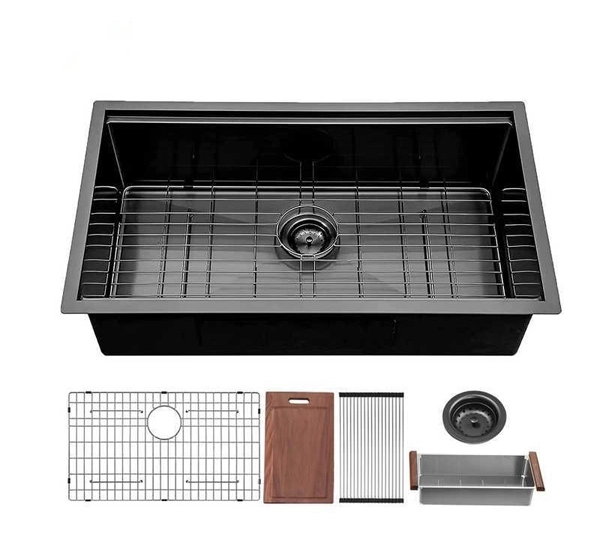
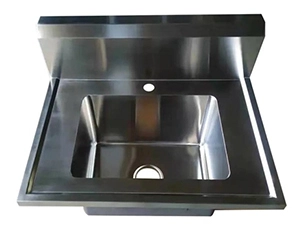
The functional core of a sink with workstation is the integrated ledge and rail system built into the sink's rim. These rails support sliding accessories—cutting board, colander, roll-up drying rack, drain basket—that move across the bowl as the task changes.
The workflow improvement is concrete:
Wash produce over the colander, which sits on the rails above the bowl
Prep on the cutting board, which slides to the position that works for the task
Drain and dry on the roll-up rack, which uses the same rail system without occupying counter space
Everything happens over the bowl. Countertop mess is reduced. Cleanup is faster. The sink becomes a multi-stage prep station rather than a single-function fixture.
Noise is the most underestimated quality signal in kitchen sinks—and one of the most common drivers of negative reviews and returns in 2026. A sink that resonates loudly when water hits the bowl communicates "cheap" regardless of the finish quality or accessory ecosystem.
A sink with workstation engineered for hotel-grade or premium residential use addresses noise through:
Steel gauge: heavier gauge (16-gauge vs 18-gauge) reduces resonance frequency and amplitude
Sound-dampening pads: applied to the underside of the bowl at the highest-vibration zones
Spray-on undercoating: covers the full bowl underside to reduce both noise and condensation
These are not cosmetic specifications—they are the difference between a sink that generates five-star reviews and one that generates return requests.
Standing water in the bowl after use is the second most common complaint in sink reviews. A sink with workstation with engineered drainage—X-channel bottom patterns or directional slope toward the drain—eliminates this complaint by ensuring water moves to the drain rather than pooling in the bowl corners.
Specifying a sink with workstation without defining the full configuration—steel grade, bowl geometry, accessory compatibility, and finish durability—produces the most common OEM failure in this category: a product that looks correct in a sample but generates complaints about accessory fit, noise, or finish wear within the first year of retail.
| Specification | Performance Impact |
|---|---|
| 304 stainless steel | Standard for residential and light commercial; good corrosion resistance; confirm nickel content for consistency |
| 316 stainless steel | For coastal markets or applications with aggressive cleaning chemicals; higher corrosion resistance |
| 16-gauge (1.5mm) | Premium tier; lower resonance; better resistance to denting and deformation |
| 18-gauge (1.2mm) | Standard tier; acceptable for most residential applications with sound dampening |
| Flatness control | Specify flatness tolerance to prevent warping during fabrication—a common quality failure in lower-grade production |
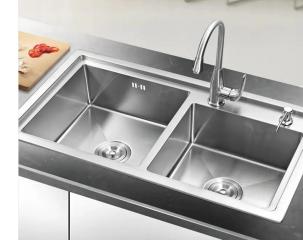
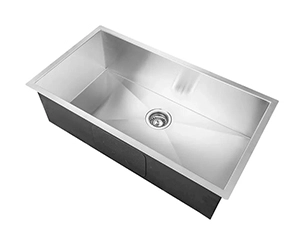
Single vs double bowl: single bowl maximizes workstation rail length and accessory travel distance; double bowl provides separate zones for washing and rinsing
Corner radius: tighter radius maximizes bowl capacity; larger radius is easier to clean—specify against the primary use case
Depth: 8–10 inches for splash control in heavy-prep applications; shallower for ergonomic preference in lower-use scenarios
The accessory ecosystem is what converts a sink with workstation from a product into a collection:
| Accessory | Specification Priority |
|---|---|
| Cutting board | Material (wood/composite), thickness, rail fit tolerance, logo placement |
| Colander | Bowl size relative to sink bowl, rail fit, drainage hole pattern |
| Roll-up drying rack | Roll diameter, rail fit, material (stainless/silicone-coated) |
| Bottom grid | Fits bowl dimensions exactly; protects finish from scratching |
| Drain basket | Fits drain opening; material compatibility with cleaning chemicals |
Rail fit tolerance is the critical specification: accessories that slide smoothly and sit securely communicate quality; accessories that wobble, bind, or fall into the bowl communicate the opposite.
| Finish | Characteristics |
|---|---|
| Brushed/satin | Standard; hides scratches well; works across most kitchen styles |
| Matte/embossed texture | Premium feel; strong fingerprint resistance; popular in contemporary collections |
| Polished | High-visibility shine; shows scratches and water spots; requires more maintenance |
For brand collections, finish consistency across batches is a procurement requirement—confirm the OEM's finish control process and request batch-to-batch comparison samples before volume production.
A china stainless steel sink OEM program gives brands control over the elements that create collection differentiation:
Logo placement and laser marking: brand mark on the sink body, accessory surfaces, and packaging
Proprietary rail dimensions: a rail system dimensioned to your accessory set prevents aftermarket accessories from fitting—protecting the collection's integrity and accessory attachment rate
Unique accessory sets: custom cutting board materials, colander colors, or drying rack configurations that are not available in the standard market
Retail-ready packaging: branded outer carton, accessory inclusion list, installation instruction card, and barcode configuration for retail and e-commerce fulfillment
The quality controls that matter most for a sink with workstation OEM program are:
Dimensional tolerance for cutout fit: the sink's outer dimensions must match the specified cutout dimensions consistently across batches; variation causes installation problems that generate contractor complaints and returns
Accessory glide smoothness: the rail-to-accessory interface must be smooth and consistent; test with the full accessory set, not just the cutting board
Finish consistency: brushed finish direction, texture depth, and color must be consistent across the bowl, rim, and any visible surfaces
Weld polish standards: visible welds must be polished to the specified finish level; unpolished welds are a common quality failure in lower-grade production
For brands selling through major retailers or operating in markets with tightening product compliance requirements, a china stainless steel sink OEM partner must provide:
Material traceability documentation (steel mill certificates, material grade confirmation)
Process documentation for QC checkpoints
Stable QC records that support retailer vendor audits and ESG reporting requirements
A sink with workstation is one of the easiest premium features to explain and demonstrate in a showroom: the accessories slide out, the workflow is immediately intuitive, and the value proposition is visible in thirty seconds. For brands selling through kitchen showrooms and design-build contractors, this demonstrability drives conversion at a higher price point than a standard sink.
Priority specification: finish quality for showroom presentation, accessory set completeness for demonstration, and cutout dimension consistency for contractor installation confidence.
In apartments, condos, and compact kitchen layouts, counter space is the primary constraint. A sink with workstation replaces the cutting board, colander, and drying rack that would otherwise occupy counter space—making it a functional upgrade that is particularly compelling in small-space applications.
Priority specification: single bowl to maximize rail length, shallow depth for ergonomic use in tight spaces, compact accessory set sized for the bowl dimensions.
Property developers and multifamily operators need durable, easy-clean features that reduce tenant complaints and maintenance calls. A sink with workstation with 16-gauge steel, engineered drainage, and a scratch-resistant finish delivers the durability required for rental turnover cycles while providing a premium feature that supports higher rental positioning.
Priority specification: 16-gauge steel, sound dampening package, engineered drainage, finish durability against cleaning chemicals.
A sink with workstation platform supports a Good/Better/Best collection structure:
| Tier | Steel Gauge | Accessory Count | Finish | Sound Package |
|---|---|---|---|---|
| Good | 18-gauge | Cutting board + colander | Brushed | Pads only |
| Better | 16-gauge | Full set (board + colander + rack + grid) | Brushed or matte | Pads + undercoating |
| Best | 16-gauge | Full set + premium materials | Embossed texture | Full undercoating + premium pads |
This tiered structure allows a single OEM platform to serve multiple retail price points without requiring separate tooling for each tier.
Cabinet size: confirm the cabinet width (30/33/36 inches) and the maximum sink outer dimensions that fit within the cabinet opening with required clearance
Installation type: undermount (most common for workstation sinks), drop-in, or flush-mount; confirm countertop material compatibility with the mounting method
Faucet and accessory hole requirements: number of holes, diameter, and position; confirm drain position (center or rear) against the plumbing rough-in location
Accessory needs by user type: heavy-prep users need the full accessory set; light-cooking users may prefer a simpler set at a lower price point
Noise expectations: confirm the sound dampening specification against the retail tier and the target customer's sensitivity
Cutout accuracy: the cutout must match the sink's outer dimensions within the specified tolerance; provide a cutout template with each sink
Rail clearance: confirm that the accessory rail does not interfere with the backsplash or faucet base when accessories are at their maximum travel position
Faucet reach alignment: the faucet spout must reach the bowl center without being blocked by accessories on the rail
| TCO Factor | Standard Sink | Sink with Workstation |
|---|---|---|
| Return rate | Higher: accessory mismatch, noise, standing water | Lower: integrated accessories, engineered drainage, sound dampening |
| Warranty claims | Rust spots, noise complaints, cutout fit | Reduced when OEM controls are applied |
| Housekeeping/cleaning time | Separate accessories to clean and store | Accessories stay with the sink; bottom grid protects finish |
| Perceived value | Lower: standard feature | Higher: demonstrable workflow improvement |
| Add-on organizer purchases | Common: customers buy separate tools | Reduced: workstation replaces most add-ons |
KPIs to track after launch:
Return rate per SKU (target: below category average)
Noise and drainage complaint frequency in reviews
Accessory attachment rate (percentage of sink purchases that include the full accessory set)
Warranty claim rate for rust, finish wear, and cutout fit issues
In 2026, kitchen brand differentiation requires functional stories that customers can feel immediately—not just finish options and price tiers. A well-engineered sink with workstation delivers that story: less countertop clutter, faster prep, easier cleanup, and fewer return-driving complaints about noise and standing water. OEM programs built on a reliable china stainless steel sink supply chain make it possible to standardize quality while tailoring finishes, accessories, and packaging to your collection strategy.
The specification work that makes this reliable happens before the first production run: confirmed steel grade and gauge, rail fit tolerance validated with the full accessory set, finish consistency confirmed across batches, and compliance documentation in place for retailer audits.
Visit the product page and submit your details to receive a recommended specification and quotation:
To receive an accurate recommendation, submit the following:
Work conditions: residential/multifamily/light commercial, water hardness, cleaning chemical habits, noise sensitivity level
Quantity: units per model per month or quarter, collection size, rollout schedule
Size and spec: cabinet size, bowl dimensions and depth, installation type, steel gauge and grade, finish, accessory set configuration
Target metrics: return rate target, noise reduction goal, drainage performance goal, finish durability expectation
Current problems: standing water, noisy sink, scratch complaints, accessory mismatch, cutout fit issues, inconsistent batches
Q1: What is a sink with workstation?
A sink with workstation is a kitchen sink designed with integrated ledges or rails built into the rim that support sliding accessories—cutting board, colander, roll-up drying rack, and drain basket—so that washing, prepping, and drying can happen in one organized zone over the bowl. The integrated rail system is the defining feature: it is engineered to specific dimensions so that the accessories fit and slide smoothly, converting the sink from a single-function fixture into a multi-stage prep station.
Q2: How does a sink with workstation compare to a standard sink plus countertop accessories?
A sink with workstation reduces countertop clutter and improves workflow because the accessories are designed to fit the rail system precisely and slide securely over the bowl. Standard sinks with aftermarket accessories typically involve tools that do not fit cleanly over the bowl, create mess around the sink perimeter, and require separate storage. The workstation concept also eliminates the "accessory mismatch" return driver—a common problem when customers buy a standard sink and then discover that their preferred cutting board or colander does not fit over it.
Q3: What ROI can brands or builders expect from a workstation sink program?
ROI from a sink with workstation OEM program is driven by three factors: higher perceived value at the retail level (the demonstrable workflow improvement supports a higher price point and better conversion), fewer post-install complaints (engineered drainage, sound dampening, and accessory fit tolerance reduce the noise, standing water, and accessory mismatch complaints that drive returns), and reduced warranty claims when OEM quality controls are applied consistently. Track return rate per SKU and noise/drainage complaint frequency in reviews before and after launching the workstation specification to quantify the ROI.
Q4: Do we need to change cabinets or plumbing to use a workstation sink?
Not always. The main constraints are cabinet width (the sink's outer dimensions must fit within the cabinet opening with required clearance), cutout dimensions (the countertop cutout must match the sink's specified dimensions), and drain location clearance (the drain position—center or rear—must align with the plumbing rough-in). Some deeper or wider workstation sink models may require a larger cabinet base or minor plumbing adjustments. Providing a cutout template with each sink and confirming cabinet compatibility during the selection process prevents the installation problems that generate contractor complaints.
Q5: What parameters should we provide for correct selection and quoting?
To receive an accurate recommendation and quotation for a sink with workstation OEM program, provide: cabinet size (width in inches), desired bowl dimensions and depth, installation type (undermount/drop-in/flush-mount), steel grade and gauge preference, finish selection, drain position (center or rear), faucet hole requirements (number, diameter, position), accessory set configuration (which accessories to include and at what tier), target retail price point, forecast quantity per model per month, rollout schedule, and any compliance or packaging requirements for your retail channels.